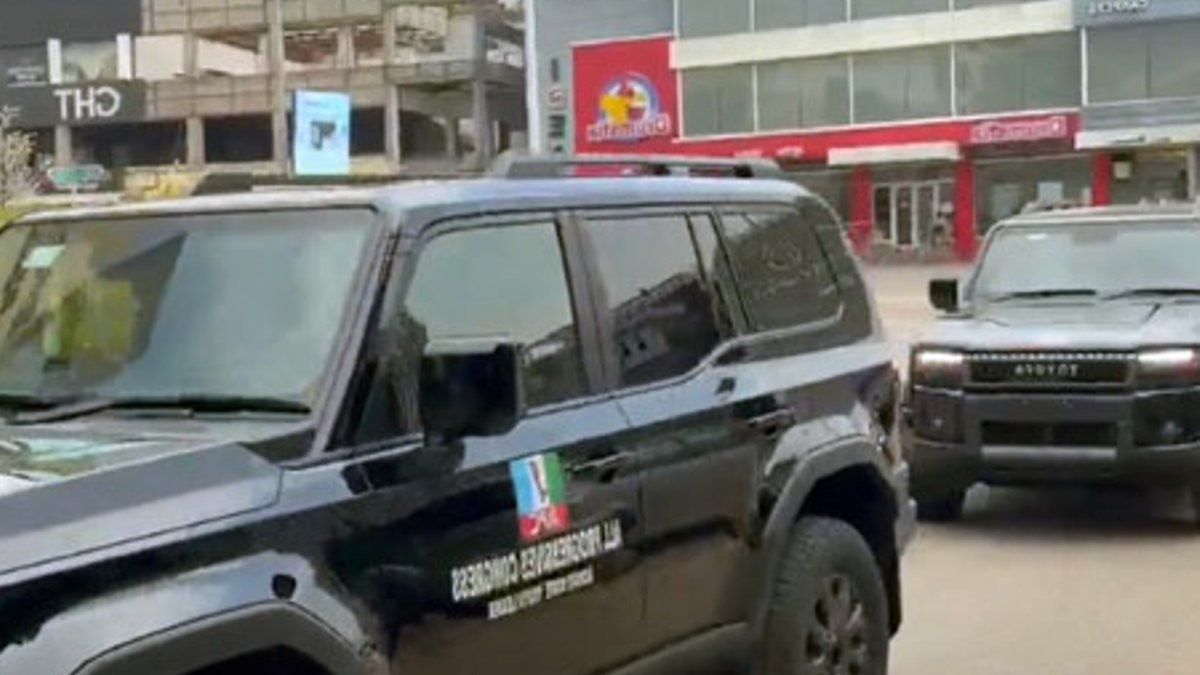
News anchor Rufai Oseni has called on the All Progressives Congress (APC) to explore buying buses that could later be repurposed into ambulances rather than allocating funds to luxury Toyota Land Cruiser Prado SUVs for election campaigns.
His plea comes amid discussions about the recent allocation of brand-new 2026 Toyota Land Cruiser Prado SUVs to certain APC youth leaders in preparation for the 2027 elections. In a video statement, Oseni highlighted the questionable emphasis on acquiring high-end campaign vehicles while Nigeria continues to experience critical shortages of ambulances and emergency medical services. He stated:
‘All I’m Begging Is That They Should Buy Buses’
My request is simple: instead of these, they should purchase buses that can later be converted into ambulances after the elections,” Oseni explained.
He maintained that buses acquired for mobilisation purposes could retain their utility post-election by being transformed into emergency medical transport, thereby aiding Nigerians during crises. His observations align with broader public concerns over the scarcity of ambulances and emergency healthcare infrastructure amid the deployment of expensive vehicles for political campaigns.
The APC National Youth Leader, Dayo Israel, had initially shared details of the SUV distribution on the X platform.
Israel subsequently removed the post following intense online backlash, though screenshots and video recordings of the announcement had already spread widely. Later reports confirmed that the First Lady had indeed donated the SUVs to the APC National Youth Wing to enhance grassroots campaigning before the 2027 elections.
The dispute primarily revolves around the financial outlay for the vehicles and whether such substantial funds could have been directed toward more pressing national needs. According to Toyota’s authorised Nigerian distributor, the 2.4-litre turbo-petrol Adventure model of the 2026 Land Cruiser Prado is priced at approximately ₦160 million, while the Premium version costs around ₦190 million. Based on these figures, seven Adventure models would total roughly ₦1.12 billion, and seven Premium versions could exceed ₦1.33 billion. However, the exact specifications of the seven SUVs remain unverified, and the listed prices do not confirm the actual purchase costs.
Read Also: Anglican Awka diocese threatens split over bishop’s forced leave
This distinction matters because no official invoice has disclosed the true expenditure. Instead, Oseni’s critique centres on the potential for more enduring public benefit from vehicles intended solely for campaign use.
For context, ₦1.12 billion could theoretically fund 11,200 business start-up grants at ₦100,000 each or 1,120 larger-scale entrepreneurship grants at ₦1 million apiece. Alternatively, using Nigeria’s ₦70,000 minimum wage as a reference, the same sum could cover monthly salaries for 16,000 workers. These calculations are illustrative, as effective empowerment initiatives would also require additional support such as training, market access, and oversight.
Proponents of campaign logistics might argue that reliable transportation is essential for organising rallies, reaching remote communities, and coordinating election activities across vast regions. Nevertheless, the debate has increasingly shifted toward whether such expenditures should be matched by comparable investments in programmes directly benefiting young Nigerians outside party structures.
ADC leader Samuel Ede condemned the move, questioning the party’s priorities during a period when many Nigerians face unemployment, food insecurity, and rising costs of living. He stated: “While millions struggle with hunger, joblessness, and soaring expenses, the APC is preparing for 2027 with seven luxury SUVs valued at about ₦1.12 billion. This raises fundamental questions about where the party’s focus truly lies. Young Nigerians require jobs, opportunities, and economic relief—not just electioneering efforts.”
Political analyst Sunday Tukur similarly questioned the long-term impact of the SUVs. “That same funding could finance meaningful youth development projects if allocated wisely. While parties have the right to campaign, the disparity between lavish political spending and the hardship faced by ordinary citizens demands closer examination.”
The controversy has evolved from a discussion about campaign logistics into a broader examination of political spending, youth development, and healthcare infrastructure.
