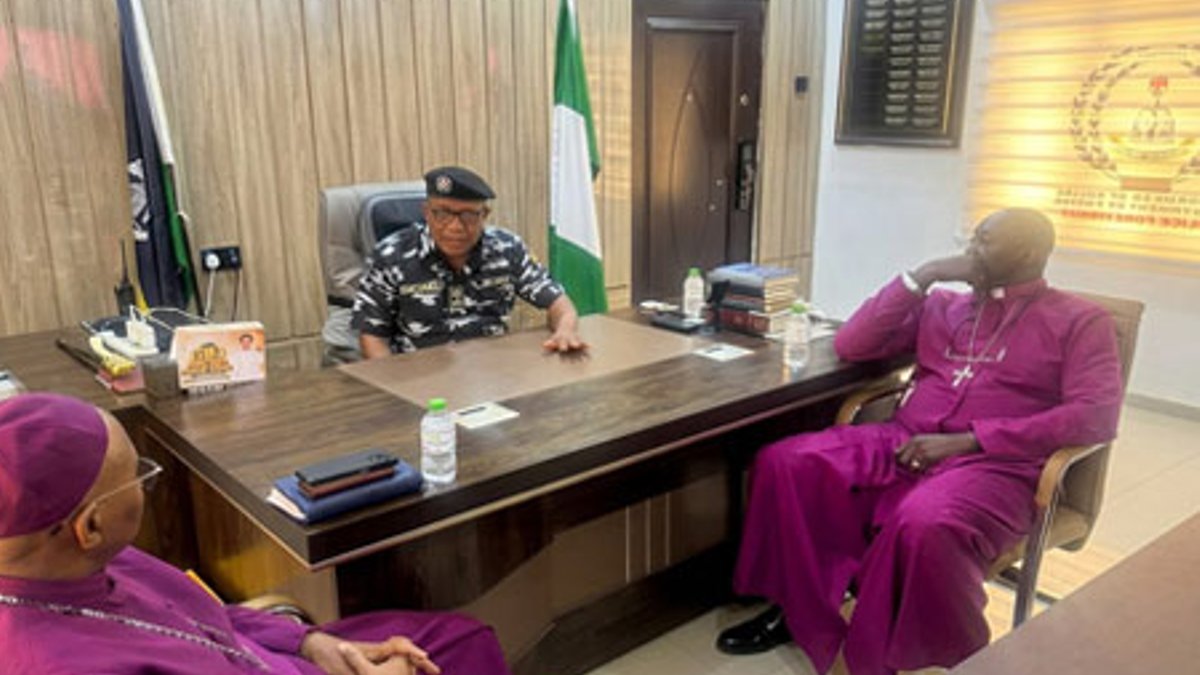
The Anglican Diocese of Awka in Anambra State is locked in a severe leadership conflict that now threatens its membership in the Church of Nigeria. The Awka Diocesan Board has stated that if the current dispute continues, the diocese may withdraw from the national church and instead align with the Church of England.
The dispute revolves around the compulsory leave imposed on Archbishop Alexander Chibuzo Ibezim, who serves both as Bishop of Awka and Archbishop of the Province of the Niger. On October 13, 2026, the Church of Nigeria’s Primate, Most Rev. Henry Ndukuba, directed Ibezim to proceed on six months compulsory leave while allegations and other developments within the Diocese were investigated. The Primate described the measure as administrative rather than disciplinary and appointed Bishop Samuel Ezeofor of Aguata to supervise the Diocese and coordinate the Province.
The Awka Diocesan Board has contested both the leave order and Ezeofor’s appointment, claiming the Primate acted beyond the Church’s 2020 Constitution and Canons. The Board has further argued that earlier panels had already submitted reports on issues within the Diocese, but that the findings were neither released nor presented to the appropriate church authorities. It also maintains that those panels did not indict Archbishop Ibezim for financial misconduct.
Archbishop Ibezim has challenged the action before the High Court of Anambra State in Suit No. A/371/2026. In the suit, he is asking the court to interpret provisions of the Church of Nigeria’s 2020 Constitution and Canons relating to disciplinary proceedings against serving bishops. He is also contending that the visitation team was improperly constituted and that the procedures prescribed by the Church’s Constitution and Canons must be followed before any disciplinary action can validly be taken against him. The court has yet to deliver a ruling on these claims.
Court battles and legal challenges escalate
The Anambra State Police Command intervened by holding a meeting with both sides, warning against inflammatory rhetoric or actions that could destabilize the diocese. Commissioner Nnanna Oji Ama stressed respect for the judicial process and urged leaders to prevent parishioners from being drawn into the conflict. The statement explicitly warned that worshippers should not suffer consequences from the leadership dispute.
Read Also: Virginia Senator Charged with Drug Trafficking
A/371/2026 will address two key constitutional issues. First, whether the Church of Nigeria’s 2020 Constitution and Canons mandate a formal disciplinary process before a bishop can be placed on compulsory leave. Ibezim’s legal team contends the Primate’s October 2026 directive bypassed procedural protections, including the requirement for a properly constituted visitation panel. The second issue concerns the validity of earlier investigative reports, which the Awka Diocesan Board claims were neither released nor presented to the appropriate church authorities. The EFCC’s interim court order from September 2025 only prohibited arrests pending further review and did not resolve the allegations.
Land sales, financial claims, and diocesan divisions deepen
The dispute over diocesan land sales persists. The Awka Diocesan Board insists all transactions were approved by synod resolutions and that funds were deposited into diocesan accounts, as verified by the treasurer and financial secretary. However, the Primate’s directive referenced a visitation team report identifying unresolved issues. The board’s refusal to accept Bishop Ezeofor’s oversight role—appointed by the Primate—has intensified divisions. Chancellor B.E.I. Nwofor, SAN, has filed a ₦5 billion damages claim against Ezeofor for alleged wrongful removal from office, though the case remains pending.
Paul University’s regulatory challenges stem from a technical but critical distinction between accreditation and approval. While the National Universities Commission (NUC) fully accredited the university’s LL.B program in November 2024, the Council of Legal Education (CLE) imposed a two-year moratorium in January 2026. The CLE’s action targeted institutions that launched law programs without prior approval, a separate requirement from NUC accreditation.
The moratorium bars Paul University’s first graduating class from the Nigerian Law School, despite the program’s compliance with NUC standards. Acting Vice-Chancellor Professor Obiora Nwosu acknowledged the university’s financial struggles, including unpaid salaries, as a factor in the diocese assuming ownership. The CLE’s March 2026 list of authorized law programs excluded Paul University, leaving its graduates ineligible for professional certification unless the moratorium is lifted.
